Professionalizing Teaching in Higher Education

The improvement of instruction has been a goal of educators as far back as the teachings of the Greek philosopher Socrates. Lueddeke (2003) pointed out that the professionalization of teaching practice in higher education is becoming more important as universities try to respond to an increasing diverse and discerning student population, issues relating to standards and quality, growing international competition, and generally “doing more with less.”

Although there are a wide variety of individualized approaches, in most cases instruction can be characterized by the following tasks: setting objectives, teaching content based on these objectives, and evaluating performance. This formula is indeed the most common; however, there have been many advocates of using alternative approaches. There is a focus on a more individualized approach to instruction in teaching design (especially in art-based discipline like architecture), where the traits of the individual learner are given more consideration. In the design studio, each approach to individualizing instruction might be different, but they all seek to manipulate the three following fundamental variables:

  • Pace:the amount of time given to a architecture student to learn the content
  • Method:the way that the instruction is structured and managed
  • Content:the material to be learned

Lueddeke, George R. “Professionalizing Teaching Practice in Higher Education: a study of disciplinary variation and ‘teaching-scholarship’.” Studies in Higher Education 28, no. 2 (2003): 213-228.
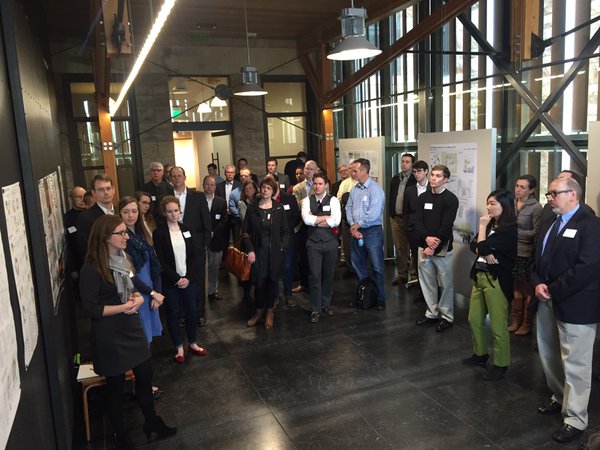
Nurturing Creativity of students vs. pedagogical capacities of studio instructors

It is important to mention that “creativity” and “creative” are frequently used words in schools of architecture. Teaching design is mainly focused on creativity while it does not provide any foundation about what it means by creativity in different aspects of teaching as a professional practice.

Needless to say, we are still using an old paradigm of the Ecole des Beaux Arts in France in the eighteenth century. This is seeking brilliance only in architectural design while not looking for the creativity of the quality of teaching in design studio.

Therefore, it is very narrow, and educators almost miss a numbers of opportunities in educating students.

BUT how to increase some pedagogical capacity and creativity of studio instructors?

Valuing Diversity

I would say valuing diversity is one of the principles of the Motivation framework for culturally responsive teaching. It is an essential part of active learning as well. It is important because being an effective instructor requires a willingness to understand that student’s differing perspective and to construct with that student a motivating educational experience.

In order to enforce expectations and realize learning outcomes, instructors must understand how learners learn and what motivates them.  The motivational framework is “a way to plan for and reflect on teaching that is respectful of different cultures. It comprises four motivational conditions and associated questions:

Establishing inclusion: How do we create or affirm a learning atmosphere in which we feel respected by and connected to one another? (best to plan for the beginning of the course)

Developing attitude: How do we create or affirm a favorable disposition toward learning through personal relevance and choice? (best to plan for the beginning of the course)

Enhancing meaning: How do we create engaging and challenging learning experiences that include students’ perspectives and values? (best to plan throughout the course)

Engendering competence: How do we create or affirm an understanding that students have effectively learned something they value and perceive as authentic to their real world? (best to plan for the end of the course)

Introduction to “Architectural Education” Forum

This Blog aims to open a forum for instructors, faculty members, teaching assistant (TA), and graduate teaching assistant (GTA) and those whose passion is an effective teaching to share their teaching experiences and to encourage them for using more education-based approach to their design studio teaching in the field of Architecture. This is due to the fact that very little attention has been paid to what factors contribute to the quality of teaching of studio instructors.

The majority of novice instructors and academics in higher education are usually disciplinary experts who have research capabilities than being teaching experts. They have little to no preparation in pedagogy. The pedagogical knowledge of the majority of teaching staffs is based on their own experiences as students, and learning through trial and error.

To promote the complex levels of thinking as the requirement among university students nowadays, instructors should be asked to rethink their pedagogy.  The fact is that the majority of studio instructors in higher education are usually well prepared for their role as researchers, and less well prepared for their role as educators that compounds this issue; this is due to the majority of architecture instructors in higher education are hired based on their disciplinary knowledge, and many have a limited knowledge of theories of learning and strategies of teaching. In fact, the early experiences with teaching could be compared with parenting. When the studio instructors first started out they had nothing to go on but their own ideas, and it did not happen to them to get support in this matter. Teaching as a professional practice in higher education has to become more effective in order to meet current demands for greater accountability.